

Interview Mistakes That Can Cost You a Job
Typically, a job interview is the last step between an applicant and a new position. It’s the moment when companies are determining if someone is a fit for the job, the corporate culture and team environment. “Qualifications and experience are important, but the interview is a chance for the candidate to impress the interviewers.
Many candidates enter interviews feeling nervous, pressured or too eager to impress. That’s pretty usual. But there are some behaviors and missteps that might create a terrible impression, even if the person is totally competent for the position. The good news? With a little preparation and self-awareness, most interview errors can be avoided. Knowing what not to do might help candidates come across as more confident, competent and prepared for the job.
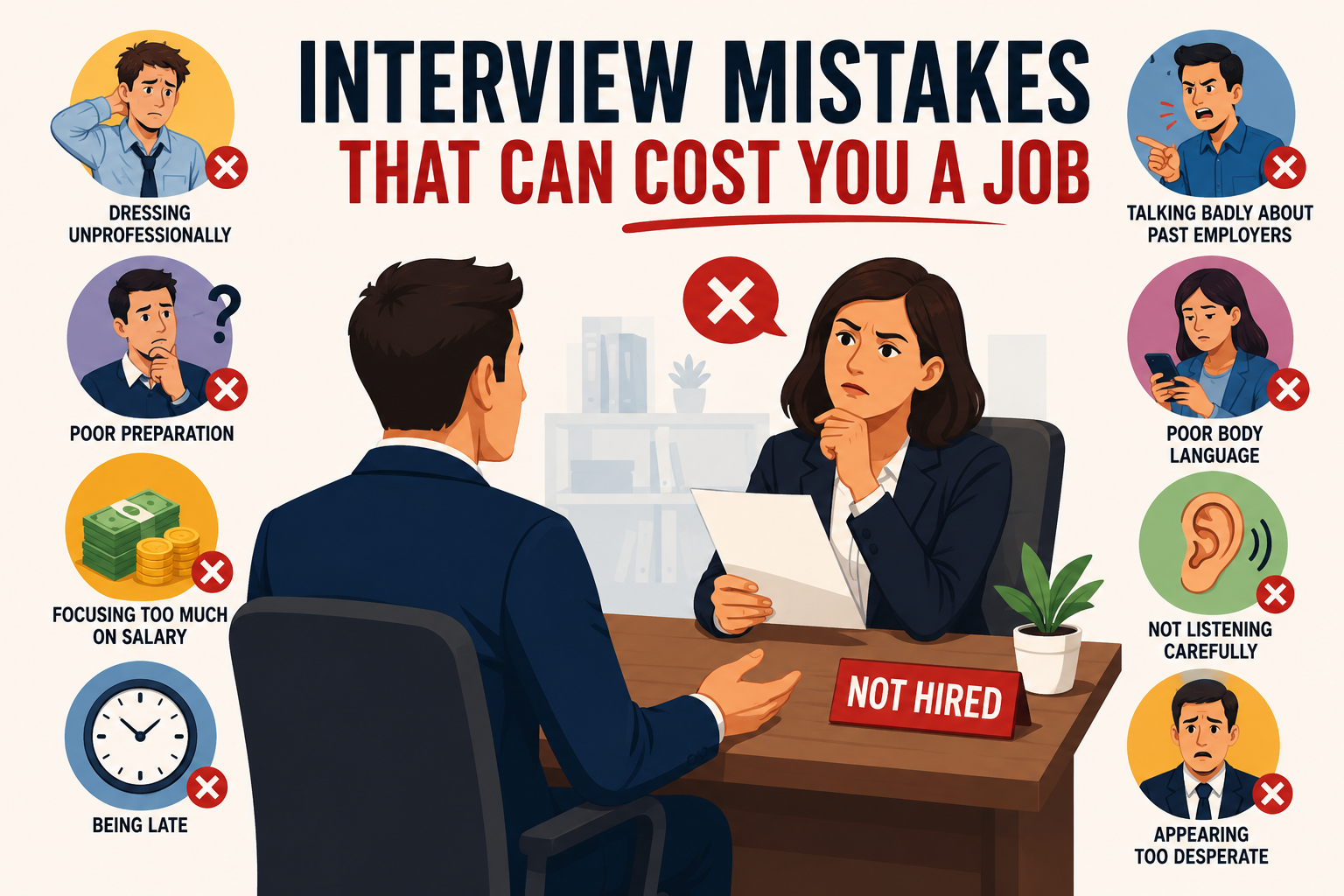
Dressing for Non-Professionalism
First impressions are quick. Interviewers will look at your dress, posture and entire appearance before they ask you a single question. Showing up in wrinkled clothes, unclean shoes, or too casual a wardrobe can suggest you weren't serious about the interview.
That doesn't mean that every interview has to be completed in pricey formal clothing. The trick is to look nice, organized and in keeping with the company. A flawless presentation demonstrates respect for the opportunity and attention to detail. Even in the more casual professions your employer is going to expect you to dress neat and professional.
Walking Without Weapons
The biggest mistake you can make in an interview is neglecting to prepare. Employers can see when an applicant hasn’t done their research or thoroughly considered the position. Questions like “What interests you about this position?” or “What do you know about our organization?” should never catch a candidate off guard.
Preparation includes looking at your own resume. Applicants typically have difficulty remembering facts about past tasks, successes or dates because they haven’t looked at their information recently. In a job interview, a résumé is fair game.
Practice in advance to reduce nerves and more effectively convey your answers. The aim is not to learn answers by rote, but to be able to talk about your experience in a natural way.
Thinking about the Money Too Much
While salary is a key factor, bringing it up too early can send the incorrect message. If an applicant asks about income, bonuses or vacation time before discussing the role itself, interviewers may assume money is the primary motivation.
The first question most employers want answered is, “What value can you bring to the company?” Pay talks usually happen later in the employment process when both sides feel they like each other. This is quite fine to negotiate salary especially if you are an experienced expert. Timing and approach; just count. Candidates that express enthusiasm for the job, but query more practical issues such as income, tend to make a better impression.
Arriving late and without informing anyone
Being late speaks a lot about reliability. Showing up late to an interview without an explanation can make employers question if that habit will translate into the job.
There are traffic, transportation problems and emergencies but communication is key. Also, it is professional and considerate of the interviewers time to call ahead and explain what happened. Where possible, candidates should aim to come early. Allow yourself a little more time to travel so you may de-stress and take a few moments to settle your nerves before the interview process begins.
Exaggeration or Fabrication
There is some pressure to bend the truth during interviews to seem more qualified. They may inflate their achievements, skills or imply that they have experience that they do not have. It may seem harmless at the time, but dishonesty typically leads to issues down the road.
Employers often want to see your references, career experience, credentials and technical skills. Once you’ve been discovered lying, that’s it. Even a small exaggeration might damage credibility. “Always honesty is the best policy. Candidates don’t need to be perfect to get a seat. Often authenticity, a desire to learn and an upbeat attitude are as vital to companies as technical competence.
Talking Badly About Your Previous Employer
A job interview is not a complaint session. Speaking negatively about a past boss, workplace or coworker might make a candidate seem unprofessional and hard to work with.
It's preferable to be calm and considerate while talking about a former experience, even if it was frustrating. “There’s no perfect work environment, but employers can see how the candidate handles conflict. Instead of focusing on the bad, candidates can highlight what they learnt from the experience or why they are seeking a healthier atmosphere for growth.
Ignore Nonverbal Signals
Communication is not only language. Interviews involve a lot of body language. They don’t glance at you. They droop. They kept gazing down at their phone. They move too much . All these may be symptoms of anxiousness or lack of confidence.
Just making eye contact, sitting up straight and listening carefully are easy practices that will help you connect more strongly with the interviewer. Being engaged in the conversation and smiling creates trust naturally too. Nervous energy is typical, especially for big interviews. Taking a few deep breaths before can help settle anxiousness and increase focus.
Hearing loss
Some applicants are so preoccupied with what they want to say next that they cease listening intently to the interviewer’s questions. This may give rise to answers that seem disjointed or insufficient. Good communication is a two-way street . Good listening skills indicate respect and the willingness to follow orders, which all companies want in a job candidate. If you do not understand a question, it is okay to not guess but to ask for clarification instead.
A Look Too Desperate
Employers like excitement, but desperation can make them uncomfortable. Being overly passionate or emphasizing repeatedly that you "need this job" detracts from your qualifications. Desperation yields to confidence. Applicants should stress the value their abilities, expertise and personality can provide to the firm. Good interviews might feel like business interactions where both sides are attempting to figure out if the opportunity is a good fit.
A perfect interview is rare. Most individuals get a bit uncomfortable and have awkward moments and make tiny blunders along the way. "Preparation, honesty and professionalism are the biggest things.
By avoiding the most common interview pitfalls, a candidate can dramatically increase his or her chances of success. Things like being well prepared, speaking clearly, dressing appropriately and being respectful during the talk go into making a good impression.
After all, employers don’t only want someone who can execute the job. They want someone they can trust, someone to chat to, someone to feel good about having on their team.