
Best Ways to Engage College Students
Teaching in college has evolved a lot in the previous several decades. Professors used to be able to give an hour-long lecture and expect their students to remember what they said. Today, college students come from a wide range of backgrounds, such as diverse cultures, income levels, and academic levels. Every student has their own set of experiences, hopes, and ways of learning when they come to class. What are the best strategies to teach and review college students in this changing world?
Getting Past the Myth of Different Learning Styles
Teachers have long thought that some kids learn best by seeing, others by hearing, and some by doing. But research has shown again and over that these groups don't always help kids study better. Teachers are starting to understand that the goal is to make things fun and different, not to put labels on pupils.
The best way to teach college students is to use a variety of ways. Use pictures with discussions, texts with real-life examples, and theory with experience. This new form of teaching keeps students interested and lets them interact with the subject in many ways, which helps them grasp it better than just memorizing it.
Putting More Emphasis on Learning by Doing than by Listening
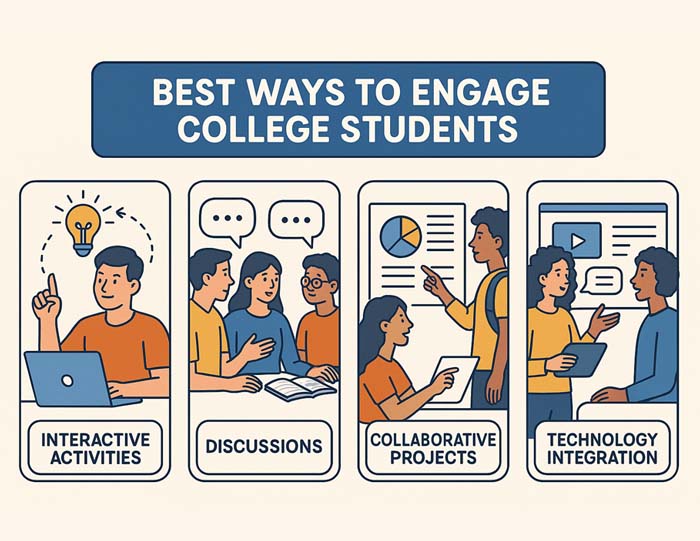
Getting college students interested is one of the best ways to teach them. Research indicates that pupils retain information more effectively when they are actively engaged rather than passively listening. There are various ways to learn actively, such as through debates, small group projects, interactive simulations, or even by addressing problems in the real world.
Instead of just teaching marketing ideas in a college business class, teachers should have students make fake ads for actual or made-up businesses. In science classes, labs and fieldwork help make ideas that are hard to understand more concrete. When students are in command of their own learning, they learn how to think critically, work together, and talk to each other. These skills are helpful in many parts of life.
Making Learning Accessible to Everyone
Inclusion is not only an objective for society; it is also imperative for education. A excellent college classroom makes sure that every student can learn, no matter what their background, how they learn, or what their personal situation is. This is more than just making improvements; it means starting from scratch to make sure that people from all walks of life can take the courses.
For example, teachers should use closed captions on movies, give students reading materials in several formats, and make sure that visual aids are clear and easy to understand. Children who don't want to speak out loud can also benefit from being encouraged to participate in other ways, such chatting, writing, or using technology. The goal is to make sure that all of the pupils feel like they belong.
Technology as a Link, Not a Block
Technology has changed the way college students learn in every way. Tech tools could make lessons more engaging and interesting. Google Workspace is an example of a place where individuals can work together online. Poll Everywhere and Kahoot are two options for students to answer questions in class.
But to be a good teacher, you need to establish a balance. People should use technology to learn, not to take over their life. The finest teachers use technology in new ways to get students involved, obtain feedback, and make learning more flexible. For instance, pre-recorded mini-lectures can help "flip" the classroom by letting students learn things at home and then use what they've learned in class by working in groups or talking about it.
Encouraging Analytical Thinking and Curiosity
You need to learn how to think in college, not just remember facts. Good teaching makes students want to learn more and do things on their own. The Socratic method is an excellent way to teach. It involves asking them questions that make them think and come up with their own answers.
It's vital for kids to be able to see things from multiple points of view, which is why it's good to get them to think about and fight about topics. Teachers who make their students think about, argue about, and defend ideas are not merely teaching them a topic; they are also making the next generation of leaders, thinkers, job seekers and problem-solvers.
Putting Theory into Practice in the Real World
A lot of the time, students wonder, "When will I ever use this?" Good college teachers know that question is coming. They connect what you learn in class to real-life circumstances to make it valuable and relevant.
For example, in a psychology class, you might use theories to look at real-life situations. In engineering, it could mean making a prototype to fix an issue in the area. Students are much more motivated and learn a lot more when they can relate what they learn to real life.
You can also connect what you learn in school to real life through internships, service learning, and classes that are centered on projects. Teachers get pupils ready for the challenges and surprises of the real world by offering them hands-on experience.
Thoughts and Comments That Make You Happy
There isn't just one way to teach. The top college teachers ask their students for feedback all the time, not simply at the end of the semester. You can use surveys, anonymous polls, or even short discussions to find out what's working and what isn't.
At the same time, making kids reflect about how far they've come helps them become more aware of themselves. Peer assessments, learning portfolios, and reflection journals are all tools that students may use to figure out what they are good at, what they need to work on, and how to take care of their own learning.
The Strength of Storytelling
Stories move us, but facts only tell us things. Adding stories to a presentation can help people remember it, no matter what the topic is, like literature, economics, or biology. Using real-life examples, stories from history, and personal experiences can help people connect with the topic on an emotional level.
For example, telling the tale of a historical individual who overcame difficulties in a psychology class can help students understand the idea of resilience better. Stories help kids understand topics that aren't very apparent by making them appear more genuine. This helps youngsters remember what they learnt instead of just remembering it.
How to Create a Classroom Culture That Works
A good classroom environment can have a big impact on how well college students learn. Kids are more likely to join in and less likely to be shy when they feel protected, respected, and encouraged to share their thoughts. Teachers may help make this kind of atmosphere by being kind, knowing kids' names, and celebrating tiny victories.
When students are in big lecture halls, it's really vital to make them feel like they are part of a community. Simple things, like asking individuals to work together or having a short chat at the start of each class, can make people feel like they belong.
Teachers Should Always Be Learning New Things
Finally, good teaching lasts a lifetime. The best college teachers are those who are always learning new things. You can improve as a teacher by going to workshops, reading up on new research, trying out different ways to teach, and being receptive to feedback that helps you.
Teachers adapt as education develops. Changing how you teach keeps college classrooms interesting and useful places to learn as technology, culture, and what students expect changes.
Getting Students Ready for the Future
There isn't one approach to teach college students that works for everyone. They are instead open-minded, adaptable, and imaginative. Students do well when they are interested, valued, and given chances to use what they learn in ways that matter.
Teachers may change the way kids learn and how they think about learning by integrating technology and human connection together, placing curiosity before obedience, and making places that promote variety and inclusion.
Ultimately, effective college instruction entails preparing students for more than mere examination performance. It also means getting them ready to go out into the world with confidence, creativity, and a sense of purpose.